

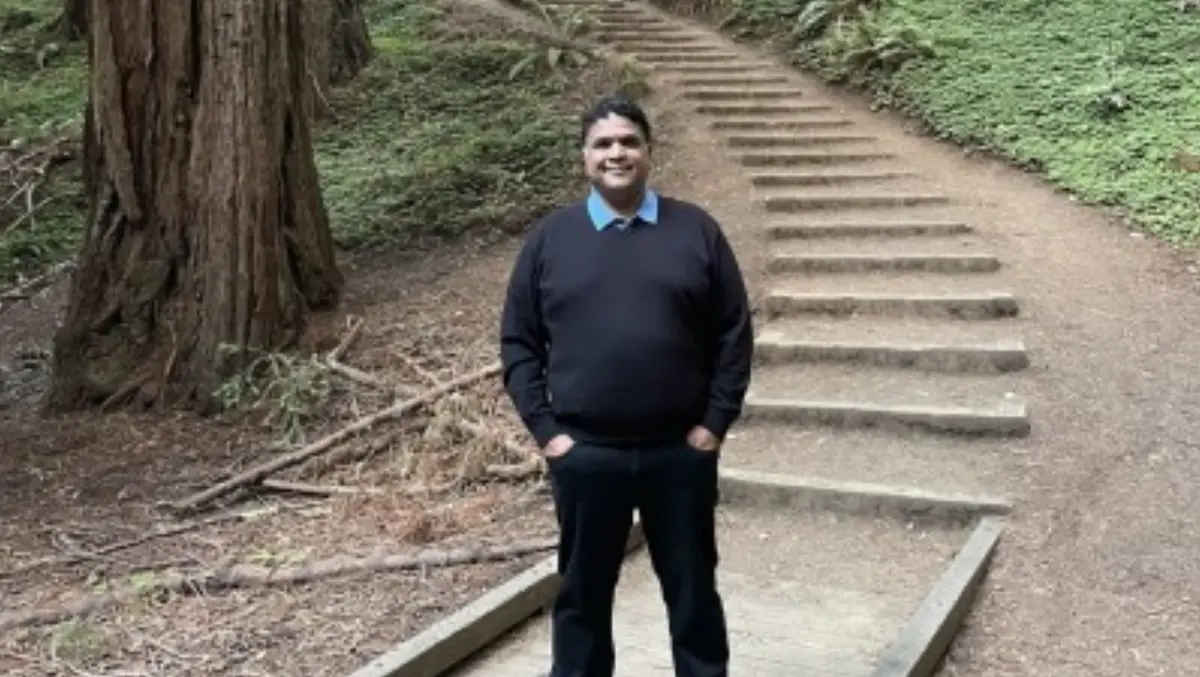

SenSen Founder Dr Subhash Challa has released a song titled Father's Love ahead of Father's Day. The track reflects a personal use of artificial intelligence by an Australian technology executive known for his work in physical AI.
Challa, who founded the Melbourne-based company and serves as its Chief Executive Officer, said the song explores how fathers express affection through actions that may not always be recognised. It follows a child's changing view of a father's emotional distance, moving towards an understanding of sacrifice, protection and care.
The release contrasts with Challa's professional background. He has spent more than 25 years working in artificial intelligence, data fusion and computer vision, and has led SenSen from a university spin-off to a listed technology company with sensing systems used in multiple countries.
Outside that work, Challa has pursued poetry and songwriting, and recently began using generative AI in that process. He described the project as an exploration of whether artificial intelligence can help people express personal ideas rather than replace human creativity.
"I have spent my career thinking about how AI can help machines better understand the world around us, but creativity asks a different question: can these extraordinary new tools also help us express something about ourselves?" said Dr Subhash Challa, Founder and Chief Executive Officer, SenSen.
He said the song grew from the way perceptions of parents change over time.
"Father's Love came from thinking about how differently we understand our parents as we grow older. Things that can look like distance or toughness to a child can, with time, reveal themselves as sacrifice, protection and love. AI gave me another way of exploring and expressing that idea," Challa said.
Patent Work
The musical project comes during a busy period for SenSen's technology work. In June, Challa and fellow inventors Nhat Vo, Louis Quinn and Duc Vo were granted US Patent 12,670,613 for image-based location technology intended to address the so-called urban canyon problem, where tall buildings can interfere with satellite positioning.
The technology underpins SenSen's Environmental Mapping Technology and enables mobile systems to determine their location in dense city environments using visual information rather than relying only on GPS signals. The patent adds to the company's work in machine perception, where it has focused on applying AI to real-world environments.
That effort centres on what SenSen describes as physical AI, in which software analyses data from sensors and cameras to interpret activity in the surrounding world. Challa's career has been closely tied to that field, making the release of a song created with the help of AI a notable departure from the industrial and civic uses more commonly associated with his work.
Noise Trial
SenSen also secured a public sector project in August when EPA Victoria selected the company to supply seven acoustic cameras for a two-year trial targeting excessively noisy vehicles. The system combines acoustic sensing, computer vision and artificial intelligence to identify vehicles and capture registration details, allowing the regulator to direct owners to submit them for testing.
The first cameras are due to be installed across Port Phillip, Casey, Knox and Stonnington. The project reflects the practical applications that have defined Challa's career, from monitoring urban conditions to improving how machines identify and respond to their surroundings.
Challa said both those industrial uses and his songwriting experiment reflect broader changes in computing.
"We are entering an era in which AI is moving beyond the screen," Challa said.
"It can help a city hear an excessively noisy vehicle, help a machine know where it is when GPS fails, and it can give an individual new tools for turning an emotion or an idea into music," he said.
He said the range of applications remains open-ended as the technology develops across fields.
"Those applications are completely different, but the exciting thing about this moment is that we are still discovering the boundaries of what these technologies can help human beings do," Challa said.
The song also carries a direct message about fatherhood that Challa said he hopes listeners take from it, regardless of the technology used to make it.
"If you cannot see a father's love, do not assume it isn't there. Some of the deepest love in the world is the love that is never asked to be noticed," Challa said.