

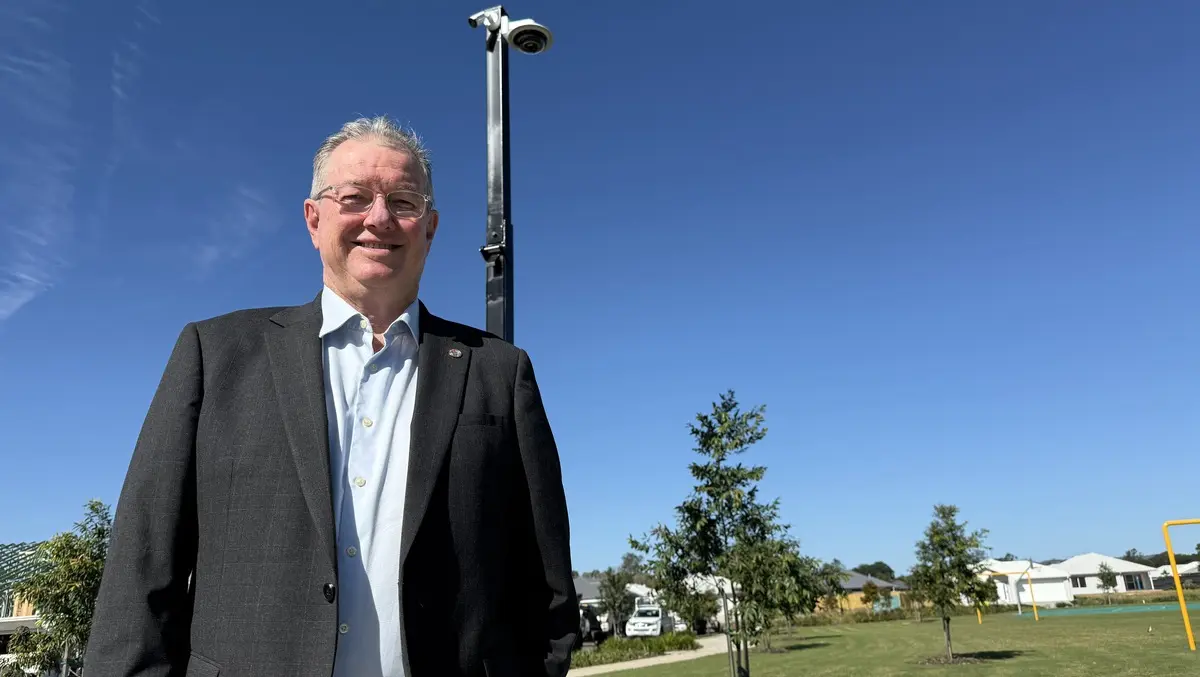
Moreton Bay shares CCTV costs with developers in Waraba
Tue, 21st Jul 2026
City of Moreton Bay has launched a cost-sharing scheme with housing developers to install CCTV in new residential estates, with the first three partnerships delivering 15 cameras in the Waraba growth area.
The model is intended to speed up the rollout of public safety cameras in fast-growing neighbourhoods while reducing the upfront cost to ratepayers. It targets areas where unoccupied homes and construction sites can heighten the risk of crime and anti-social behaviour.
Waraba is a major expansion area in Moreton Bay and is expected to house 70,000 people when fully developed. The new cameras were funded through agreements with Lennium Group at Lilywood Landings, Stockland at Rivermont and Orchard Property Group at Aire Lilywood.
The deals mark an early use of a partnership model in which developers contribute to public CCTV infrastructure as estates are built out. The arrangement followed discussions initiated by Lennium Group about a different way to fund cameras in new communities.
Moreton Bay already has 2,080 CCTV cameras across the city, giving it one of the largest local government camera networks in Queensland. The new estate agreements extend that network into suburban areas experiencing rapid housing construction.
The move forms part of a broader effort to install safety infrastructure earlier in the life of new communities. That contrasts with the more traditional approach of adding public facilities later, after population growth and local activity have increased.
Mayor Peter Flannery said the partnership was designed to support residents as new housing areas expand. "Residents deserve to feel secure in their own homes and in public spaces, which is why Council is making CCTV a priority across the City including in our newest housing areas," Flannery said.
He said the funding structure could also reduce pressure on the public purse. "By working with developers to share the cost of providing CCTV, we can ensure public safety infrastructure is installed at the earliest opportunity and for a fraction of a cost to ratepayers," Flannery said.
Growth areas
Local governments across Australia have faced pressure to keep public infrastructure in step with greenfield housing development, particularly in outer suburban corridors where population growth can outpace services. In that context, cost-sharing models with private developers are increasingly used for roads, parks and community facilities, though public safety systems are less commonly included.
In Moreton Bay, the focus on new estates reflects practical issues that can emerge in the early stages of development. Construction traffic, vacant lots and homes awaiting occupation can leave emerging suburbs with limited passive surveillance while basic community infrastructure is still taking shape.
The 15 cameras installed in Waraba are a small addition to the citywide network in absolute terms, but they also show how the council is directing surveillance infrastructure to places facing immediate development pressures. It did not set out the financial split for each project, but said the approach reduced installation costs for ratepayers.
Developer role
The participation of three developers suggests the model may be gaining acceptance among builders and land groups active in large masterplanned estates, particularly where security is seen as part of community planning. For developers, visible public safety measures can also form part of the broader mix of local services that shapes how new estates are perceived by buyers and residents.
For councils, the arrangement offers a way to extend infrastructure without carrying the full initial cost alone. It also brings installation forward to a point when suburbs are still under construction, rather than waiting until a larger resident base is in place.
Moreton Bay's existing CCTV footprint gives it a substantial base for expansion. With 2,080 cameras already operating across the local government area, the network ranks among the largest run by any council in Queensland.
The Waraba rollout indicates that as large housing projects advance, councils and developers may increasingly look to shared funding models for services that sit between public infrastructure and estate planning. In Moreton Bay, the first test of that approach has been 15 new cameras in an area expected to become home to 70,000 people.