

Middle managers want humans in AI security decisions
Thu, 8th Oct 2026 (Today)
TeamViewer has published research showing middle managers are far more likely than executive leaders to want human involvement in security-sensitive AI decisions. The study points to an internal gap over how much autonomy AI should have in workplace IT tasks.
Globally, 46% of middle managers said a person should be involved when AI resolves IT issues that could affect security, data or business operations, compared with 24% of executive leaders. Senior managers sat between those groups. Across IT decision-makers, security, privacy and risk concerns were the most common barrier to adoption, cited by 45%.
The figures suggest people closer to day-to-day operations are more cautious about handing authority to autonomous systems than the executives setting strategy. The divide also appeared in responses on security risks and access controls.
Nearly a third of workers globally said security risks or unauthorised access were among their biggest concerns about AI acting without a human in the loop. That was cited by 33% of both middle and senior managers, compared with 23% of executive leaders.
Australian responses broadly followed the same pattern while also showing relatively strong support for guardrails around autonomous AI. Some 42% of Australian workers said strong security and privacy protections would make them more comfortable allowing AI to fix problems autonomously, while 74% said they were more likely to trust AI when it showed what it was doing and why.
At the same time, 55% of Australian workers said they did not always know when to trust AI and when to verify its output. Only 52% said accountability was clear when autonomous AI systems made mistakes.
Controls and visibility
The research suggests visibility into AI actions remains central to trust. Globally, 73% of workers said they were more likely to trust AI when it showed what it was doing and why, and 70% said they were comfortable with AI taking action as long as they could step in when needed.
Limits on what systems can access also featured prominently. More than a third of workers globally said they wanted restrictions on AI access before allowing it to act independently. Australian workers were slightly more cautious on that measure, at 40%.
Views on those safeguards varied by seniority. More than four in ten senior managers said limiting what AI could access would make them more comfortable with autonomous fixes at work, compared with 37% of middle managers and 32% of executive leaders.
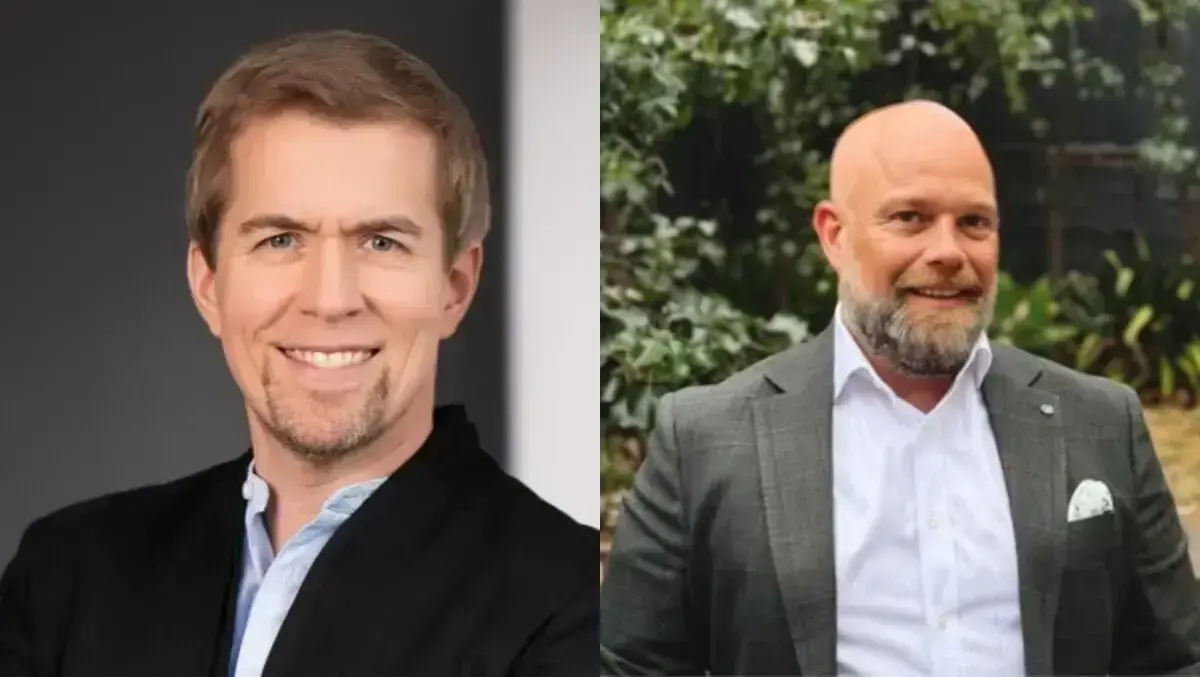
Jan Bee, Chief Information Security Officer at TeamViewer, said the survey underlined the need to build oversight into AI systems from the start. "Security cannot be added after autonomy is introduced. The more authority an AI system has, the more important it is that its actions are transparent and that clear boundaries define when human approval is required," Bee said.
Bee said leaders should not assume attitudes are consistent across the organisation. "Business leaders should also not assume that their own comfort with autonomy is shared across the organisation. That principle guides our AI features: actions are recorded, customers retain visibility, and system-altering actions require approval so that people remain in control," Bee said.
Industry split
The survey also found marked differences between sectors. Almost half of workers in energy, utilities, and oil and gas said they wanted human involvement when AI handled IT issues with possible effects on security, data or operations, compared with 28% in marketing, media, and communications.
That spread suggests attitudes to autonomous systems are shaped not only by job level but also by the operational and regulatory risks facing different industries. Sectors dealing with critical infrastructure or sensitive operational technology appear more inclined to keep a person involved in decision-making.
Accountability gap
Questions over responsibility remain unsettled. Globally, 49% of respondents said accountability was clear when autonomous systems made mistakes, leaving just over half without that clarity.
There was also no strong consensus on who should be responsible. Some 26% placed responsibility on IT, 25% on themselves, and 17% said no one should be responsible because it was a system. In Australia, 24% pointed to IT, 28% to themselves, and 13% said no one should be responsible.
For employers introducing more autonomous tools, those results point to a policy problem as much as a technical one. If staff do not know when to trust systems, when to intervene, and who is accountable for errors, businesses may find adoption slows even where the tools are available.
Tristan Ohlenrott, ANZ Country Manager at TeamViewer, said Australian workers were looking for clear safeguards rather than rejecting AI outright. "Here in Australia, employees are not opposed to AI taking on more responsibility, but they want confidence that the right safeguards are in place," Ohlenrott said.
He said visibility into AI actions was a key factor in building that trust. "With 74% of Australian workers more likely to trust AI when it shows what it is doing and why, transparency needs to be built into how businesses introduce autonomous AI," Ohlenrott said.
Ohlenrott said respondents wanted clear boundaries around AI access and autonomy. "For Australian businesses, that means setting clear boundaries around what AI can access and do independently, making its actions visible, and defining when a human needs to step in. Security needs to be part of those guardrails from the outset, particularly when AI is accessing sensitive data or making decisions that could affect operations. Autonomy should not mean handing over control. Businesses need to give AI room to act, while keeping humans firmly in control of the decisions and outcomes," Ohlenrott said.
The study was conducted by Sapio Research on behalf of TeamViewer among 4,200 respondents across nine markets: Australia, the US, the UK, France, Germany, Italy, Japan, Singapore and Brazil.