

Catchpoint acquisition by LogicMonitor 'makes a lot of sense'
Tue, 19th May 2026 (Today)
Following its recent acquisition by LogicMonitor, Catchpoint is confident that each side of the deal will complement each other as they assist organisations in moving from reactive IT monitoring, to predictive AI-driven automation.
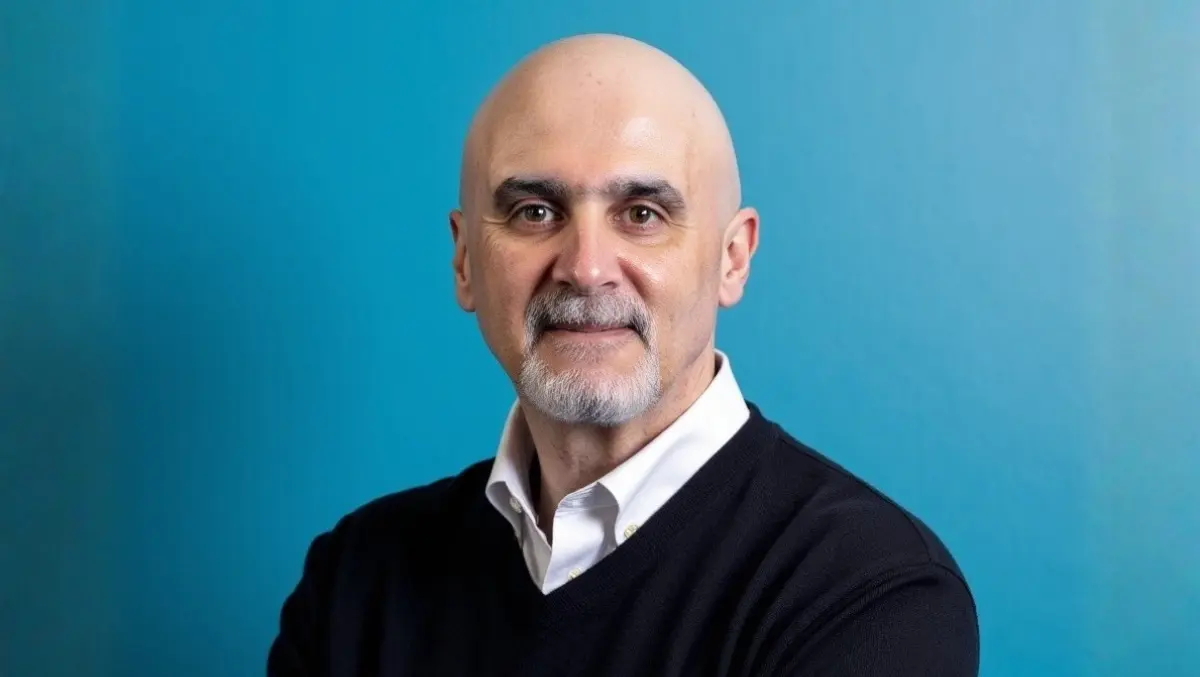
Building up from humble beginnings in his California garage in the late 2000s, Catchpoint founder Mehdi Daoudi always had a vision for customer experience. Incidentally, a year earlier, LogicMonitor was founded only a couple of hours away in Santa Barbara.
That vision was forged from an experience that taught him how good monitoring should be done.
"I had this incident in my previous career where I literally walked into my NOC and I saw people lift their feet on the table and everything was (fine), they were chilling and we were having a major meltdown, but the internal monitoring was telling them that everything is okay," Daoudi said.
"An analogy would be you're having a hemorrhage, internally you're bleeding, but from the outside everything looks okay.
"That's when I realised that in order for you to do really good monitoring, you need to monitor from where it matters the most, and for me, that's where the end users are."
Seventeen years and more than 400 customers later, when LogicMonitor came knocking at the door, it made perfect sense for both parties, as Catchpoint was actually a customer first. After an introduction with CEO Christina Kosmowski, Daoudi knew that there was a good match, with both sides of the acquisition bringing unique selling points.
The ultimate goal is enriching customer organisations, and while some acquisitions can result in redundancies and one side being swallowed up, this one has clear benefits for each side.
"What makes a lot of sense in this union is the fact that we are bringing to the table two different data sets, where typically, sometimes acquisitions happen, there's two companies that do the same thing and then there's going to be a turf war of which technology to keep," Daoudi said.
"Where here what's beautiful is actually LogicMonitor does this, Catchpoint does something completely different.
"The goal is how can we enrich the data that we give to our customers so they can run their businesses better? At the end of the day, that's what we do. Can we make a hospital run better? Can we make an eCommerce company run better? Can we make a trading company do better trades?
"We have car companies that use both LogicMonitor and Catchpoint. Can they make their cars better, faster with zero defects? I think that's our goal."
Catchpoint's philosophy for favouring predictive AI over preventative AI can be explained through another analogy: the threat of a large-scale fire in a CBD office building comprising 40 or 50 floors, and thousands of people inside at peak times. Without the appropriate alarms in the right locations, it could take security a long period of time to become aware of the issue, before alerting the authorities, with the clock ticking.
Most companies are still lagging behind, with reactive AI policies rather than shifting to a predictive model. Catchpoint is focused on having the right sensors, but also only as many as needed.
"Predictability means that at some point the smoke detector is going to be able to notice that there is somebody in the room first, so the room is occupied, and then maybe there is an anomaly that is being detected in maybe CO2 or any other thing that will say something is out of whack in this room," Daoudi said.
"Maybe we should call (000). But you cannot get to that level of prediction if you don't have the right sensors in the right spots.
"If people want to jump and start getting to AI, if you don't have the right sensors, then I don't know what we're automating, but you might end up having the wrong results."
Catchpoint have been figuring out how to effectively use AI and automation from the start. Under the right circumstances, AI is better than a human and can be significantly beneficial to workflows, saving organisations time and money.
Rather than perceiving the introduction of AI as the first step towards an apocalypse, Daoudi believes it will be a tool to augment and expand human capability, not replace it entirely.
"How do we automate? Just because what we've seen over the last 30 years is complexity, more complexity, more of the Internet," Daoudi said.
"Now we're talking about SpaceX, satellite connectivity. All this stuff is complexity.
"So the only way we're going to be able to tame this monster is automation. And the only way to get there is AI.
"There probably are a bunch of vendors that are probably smoke and mirrors. But the thing that AI is very good at, better than any human, is connecting dots. Especially dots that are not very easy to connect.
"Because the data is collected like in a log file. Data can be a time series. Data can be somewhere else. And being able to fetch all that stuff and literally put a puzzle together, create a picture, is something that machines can do much, much faster than a human.
"Humans are still going to be part of the workflows in either guardrails or fine-tuning the playbooks."