

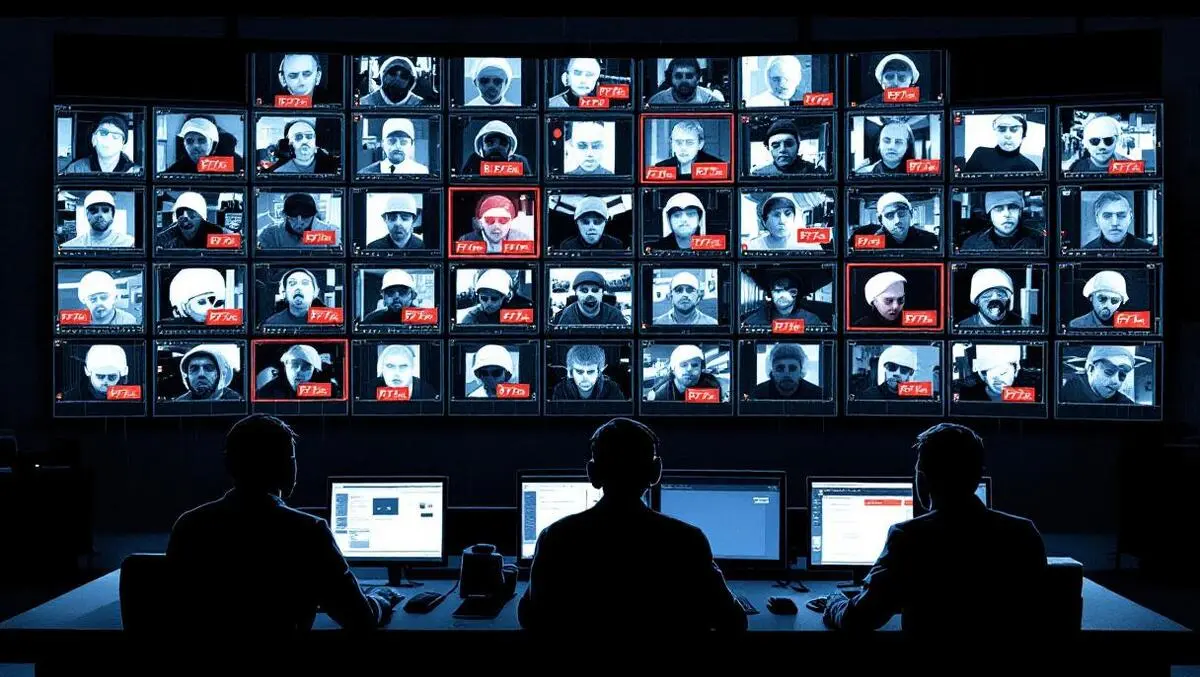
3DiVi urges phased rollout to cut CCTV facial misfires
Thu, 15th Jan 2026.webp)
3DiVi has set out a phased deployment framework for facial recognition in municipal CCTV networks after a survey of practitioners reported unexpected increases in false matches following go-live.
The company said a closed survey of 89 system integrators, public safety leaders, product owners and CTOs found that 83% saw unexpected spikes in false acceptance rates after deployment. It also said 75% of respondents treated facial recognition as a one-time setup rather than an operational system that needs ongoing tuning.
Municipal authorities in many markets have expanded the use of facial recognition technology in "safe city" CCTV environments. Programmes typically focus on identifying missing people and matching individuals against watchlists. The deployments often sit alongside other video analytics and incident response workflows.
3DiVi described a set of common reasons for performance gaps between laboratory testing and live operation. It said real-world camera feeds create conditions that differ sharply from curated datasets used for training and validation.
Real-world gap
The company said street scenes introduce variables that degrade detection and matching rates. It cited crowd density, movement speed, weather, changing lighting conditions, head pose variation, partial occlusions such as hats, masks and glasses, and low-resolution streams from older CCTV equipment. It also pointed to demographic diversity as a factor that can expose weaknesses in test data selection.
It also highlighted configuration issues around confidence thresholds. Threshold settings often follow performance on clean development datasets. The company said those settings can break down once systems face motion blur, compressed video, congested streets, and heterogeneous camera estates. It argued that False Accept Rate targets should align with operational risk tolerance in public safety settings, rather than benchmark scores.
The company also raised the issue of ageing reference images in watchlists and other databases. It said changes in appearance over time and low-quality profile photos can erode match reliability. It described this as a drift that can turn prior true matches into false accepts months later.
Operational scale forms another point of risk, according to 3DiVi. It said production systems face high-volume live video streams, network congestion, variable hardware load, and video compression artifacts. It said weak links across the pipeline can reduce processing speed and recognition accuracy.
Phased rollout
3DiVi set out a three-phase approach that it said aims to make facial recognition deployments more predictable. It described the phases as pilot deployment, load testing, and city-wide scaling.
During the pilot phase, 3DiVi said operators should install a small number of cameras and review placement and configuration if results fall short. It said teams should measure detection rates, defined as faces detected among those passing through an identification zone, and compare results against a target that it put at "typically 85-95%". It also recommended filtering out low-quality images before building watchlists.
The company also described a test group process. It said operators should create a test group for identification evaluation and add those faces to the database. It recommended an initially low recognition threshold "(e.g., 0.7)" during testing. It also said teams should define scenarios for each camera, including day and night and different weather conditions, and record camera streams for later load testing. It said operators should then optimise thresholds based on the test results.
For load testing, 3DiVi said teams should select server units based on theoretical estimates and then validate performance using recorded video. It recommended increasing the number of video streams until recognition quality metrics begin to degrade. It set an "allowed deterioration: ≤5%". It said the result should define the maximum number of streams per server that maintains the target quality metrics.
In the scaling phase, 3DiVi said operators should install cameras according to parameters defined in the pilot stage and re-check each camera for configuration and placement.
Ongoing operations
Beyond rollout, 3DiVi described recurring checks and continuous monitoring. It said operators should review each camera every six months for environmental changes or degradation. It also said systems should continuously monitor total detections per camera, correct identifications, false identifications, and anomalies such as misalignment or lens obstruction.
The framework also placed emphasis on testing with representative data, managing thresholds against operational risk, maintaining the photo database, and testing across the full pipeline rather than focusing only on the algorithm.
Leonid Leshukov, Head of Product Development, 3DiVi, said: "A production-ready FRT system requires: Representative testing on real-world data risk-aligned thresholds continuous database photo management full-pipeline performance testing live monitoring, alerting, and auditing clear and defensible decision logic."
3DiVi also argued that agencies should expect system drift if they treat facial recognition as a fixed procurement item, rather than an operational system that changes with the city environment and the underlying data.
"Municipalities that treat it as a living system - continuously tuned and monitored - will build safer, more transparent, and more resilient urban environments." said Leshukov.