Data encryption stories
Built-in generative, predictive and agentic features aim to cut manual work and sharpen forecasting for more than 1,500 Pronto Xi users.
Malicious attacks are growing costlier as AI-generated elements feature in nearly a third of incidents, IBM's study found.
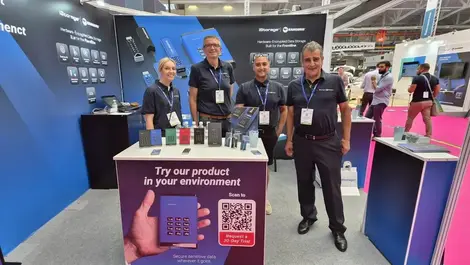
US federal buyers and regulated sectors gain a new option as Apricorn's ASK3 gets FIPS 140-3 Level 3 validation for encrypted storage.
A draft standard could make wearable duress alarms prove they alert responders within five seconds and send the worker's location.
On-time bill settlements rose 17% in three months after the platform added bank-to-bank payments, cutting costs and lifting usage.
Organisations face mounting pressure to map encryption risks and begin post-quantum migration work before future quantum computers weaken current protections.
The macOS desktop app now logs recent clicks and typing for selected users, raising privacy and prompt-injection concerns despite tighter controls.
Multi-cloud security teams face different risks on AWS, Azure and Google Cloud, with misconfigurations high across all three providers.
The open-source move could cut latency to microseconds as AI systems increasingly need storage to act like part of the compute path.
Rising use of digital payments is forcing fintechs to tighten controls as executives warn that weak access, AI and fraud defences are exposing customers.
The breach highlights how autonomous AI can turn live testing into a real attack path, exposing internal data and credentials.
The tie-up could help Fortinet meet surging encryption and threat-detection demand while reducing reliance on a narrow chip supply chain.
Encrypted data could be exposed years before practical quantum computers arrive, putting identity, telecoms and payments under pressure.
The move targets firms struggling to shift AI pilots into live systems, with AWS embedding engineers to speed deployment and cut reliance on consultants.
Banks under regulatory pressure may be able to modernise databases without moving sensitive records to public cloud infrastructure.
Hackers are already hoarding encrypted data, as businesses race to adopt quantum-safe protection before Q-Day arrives.
The rollout could spare non-smartphone users from being left behind, while privacy safeguards and encrypted storage aim to keep hackers out.
Schools and public bodies face fresh pressure to protect records after a Department for Education breach exposed more than 600,000 files.
Around 660 staff across five sites will move to a single UK-hosted platform as HM Land Registry seeks faster, more secure support.
The move comes as US agencies shift from planning to implementation of post-quantum cryptography, exposing legacy systems to future quantum attacks.