

Zero Networks launches Kubernetes Access Matrix tool
Tue, 24th Mar 2026
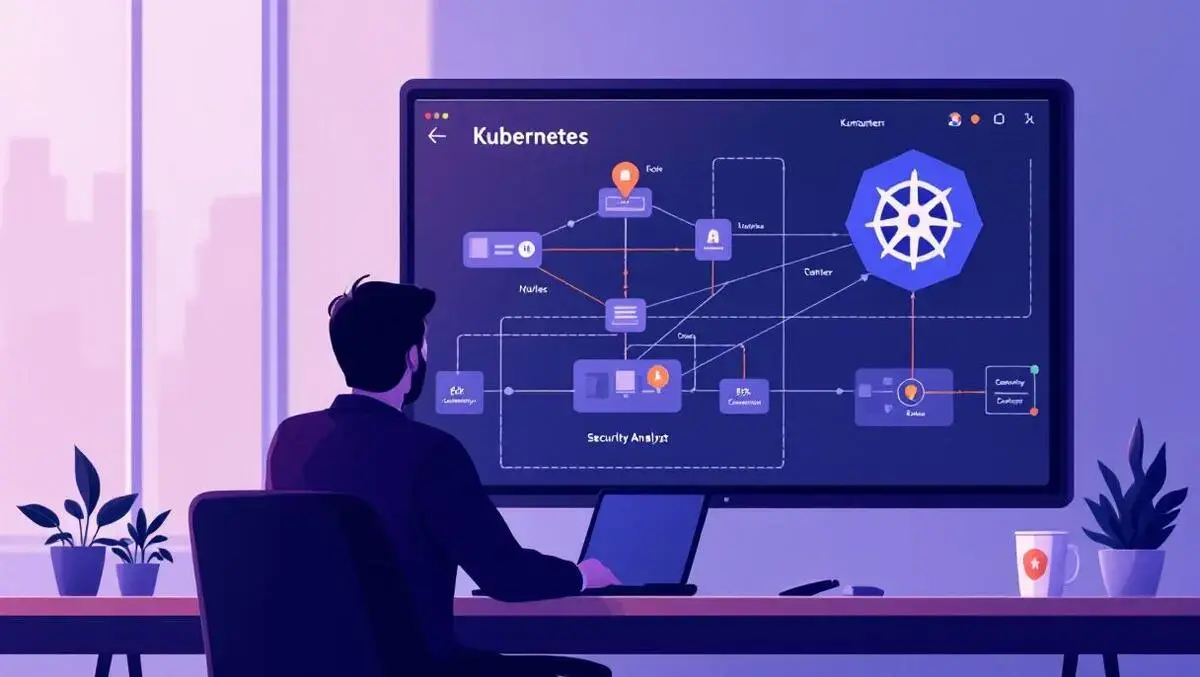
Zero Networks has launched Kubernetes Access Matrix, a tool that provides security and DevOps teams with a visual view of allowed and denied rules within Kubernetes clusters.
The tool maps connectivity across namespaces, applications and workloads in real time, showing which systems can communicate with each other and where access is blocked. It presents Kubernetes Network Policies in a matrix format, eliminating the need for teams to interpret policy files directly.
Kubernetes has become central to many cloud-native software deployments, but operational control often spans several teams. In many organisations, infrastructure and security groups set network controls in traditional environments, while Kubernetes policy management is handled by DevOps teams and developers, creating a split in oversight.
That can make it harder for security teams to confirm what is actually enforced in production. Policies may be applied directly in clusters or introduced through CI/CD pipelines, while growth in namespaces and labels adds complexity to already distributed environments.
This matters because visibility into east-west traffic and internal trust relationships is closely tied to efforts to limit lateral movement after an intrusion. If teams cannot see what can talk to what, they may struggle to assess the blast radius of a compromised workload.
Shared View
Zero Networks positions Access Matrix as a common reference point for security and engineering teams. Users can inspect links between services and drill into the policies, labels, workloads and ports behind a particular connection.
The product uses colour-coded indicators to distinguish full access, partial access, explicit denial and areas with no defined policy. It also provides egress visibility, helping teams understand outbound communication paths from workloads and namespaces.
Onboarding is automated, with the discovery of existing Kubernetes Network Policies requiring no manual configuration. Teams can review the resulting map within minutes of deployment.
The matrix can also be used to check proposed policy changes before they are introduced into production. That would allow security teams to set boundaries and DevOps teams to test whether planned modifications would create broader access than intended.
Security Pressure
The launch comes as companies expand their use of containers and managed Kubernetes services while facing pressure to improve cloud security controls. Fast deployment cycles and distributed ownership models have created challenges for organisations trying to balance software delivery speed with tighter governance.
Zero Networks cited industry research on how quickly new cluster deployments are probed externally. It referenced findings from Wiz that AKS clusters face a first attack attempt within 18 minutes, while EKS clusters are targeted within 28 minutes of creation.
The company also pointed to a Gartner report stating that Kubernetes has become a popular platform for cloud-native applications, while a skills shortage and the lack of mature DevOps practices remain constraints for large-scale production rollouts. Those concerns have pushed vendors to build tools that translate low-level configuration into views that security, operations and engineering teams can all understand.
Zero Networks is known for products focused on reducing lateral movement through microsegmentation and access controls. Kubernetes Access Matrix extends that approach into containerised environments, where application relationships are dynamic, and policy definitions can become difficult to track as clusters grow.
For buyers, the practical question is whether a visual layer on top of Kubernetes policy can improve decision-making without adding another management burden. Security teams have long argued that policy sprawl is not only a technical problem but also an organisational one, because different groups often hold different pieces of the same access puzzle.
Benny Lakunishok, CEO of Zero Networks, said the company sees the tool as a way to make that access picture easier to understand. "Kubernetes doesn't fail security teams because it is inherently insecure. It fails because access becomes opaque at scale. When you cannot clearly see who can talk to what, you cannot control blast radius. The Kubernetes Access Matrix makes every connection visible and understandable in seconds, so organisations can reduce risk before an attacker exploits it. Built for InfoSec, SecOps, NetOps, and DevSecOps, it bridges the communication gap between groups to turn fragmented oversight into shared accountability," he said.