

WinDC, Armada launch portable AI data centres at wind farms
Mon, 16th Mar 2026
WinDC has partnered with Armada to deploy a network of portable, modular data centres at renewable energy sites in Australia, with an initial rollout planned across parts of the National Energy Market and Western Australia.
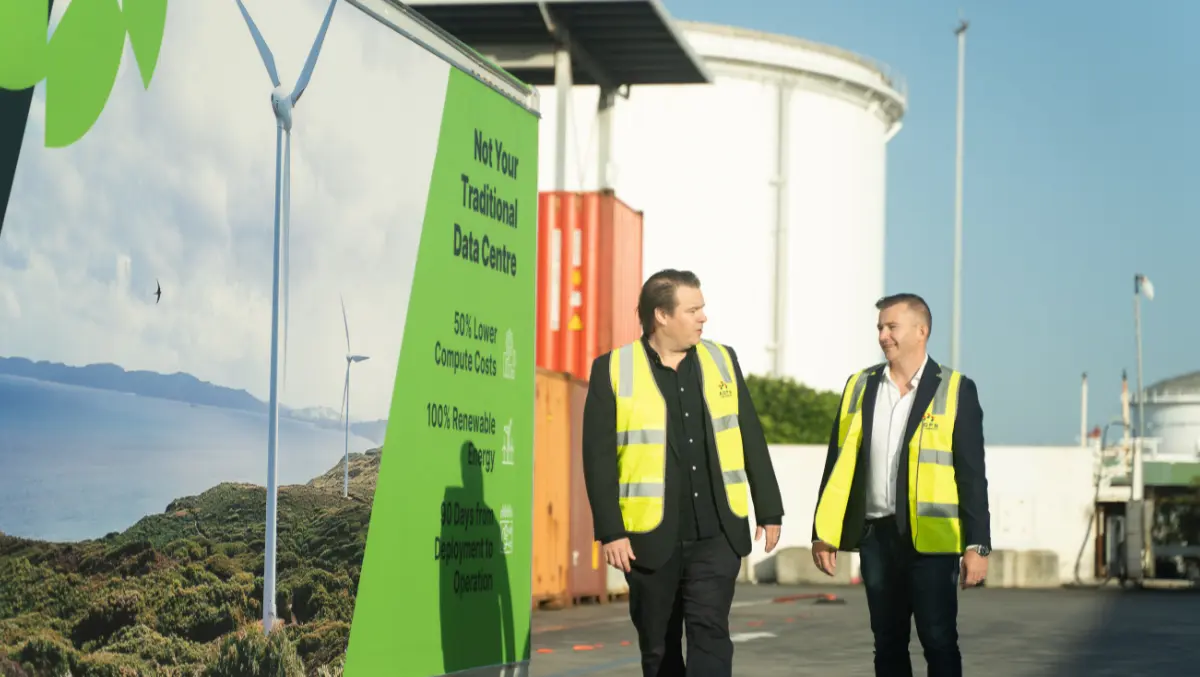
The first unit has already arrived in Australia. The deployment centres on shipping-container-sized modules that can be moved by truck and installed at or near generation assets such as wind and solar farms and battery sites.
At-source compute
The partnership targets a growing constraint in Australia's energy system: renewable generators increasingly curtail output because the transmission network cannot move electricity to demand centres fast enough. Industry and government data have highlighted curtailment as a rising issue as more wind and solar generation connects to the grid.
WinDC and Armada are positioning their approach as an alternative to large, city-based data centres that draw power through congested transmission lines. Instead, the model places computing infrastructure close to where electricity is produced, keeping consumption local and reducing reliance on long-distance power flows.
They cited estimates that Australia wasted 7.2 terawatt-hours of renewable electricity in 2025, up from 4.5 terawatt-hours a year earlier. The figure could exceed 10 terawatt-hours in 2026 if the grid continues to lag new generation projects.
Under the initial deployment plan, WinDC will roll out 11 megawatts of modular data centre capacity designed and built by Armada and its partners. Sites are expected in New South Wales and other areas in the National Energy Market, with additional locations planned in Western Australia.
Each unit can be deployed in about 90 days. The companies also say the modules run on renewable energy and avoid Scope 2 emissions, with accounting verified down to the GPU-hour.
Data centre design
The modules are ISO-conformant and designed for relocation, giving operators flexibility if local network conditions, generation economics, or planning settings change over time. Capacity can also move between sites if curtailment shifts geographically.
The units use a closed-loop cooling system that requires no water, according to the companies. Water use has become a more prominent issue for data centres, particularly in areas facing drought risk and tighter planning scrutiny.
WinDC is pitching renewable asset owners on monetising electricity that would otherwise be curtailed. A generator can host a unit and convert excess production into computing revenue rather than selling at negative prices or shutting off output. The companies also argue that local consumption reduces the need for additional transmission investment by lowering peak flows to metropolitan areas.
"Australia has the wind, the sun, and the land to be a genuine force in global AI infrastructure. What has been holding us back is the grid. We identified that problem ten years ago working alongside renewable energy providers on the east coast, and this is the solution we built," said Andrew Sjoquist, Founder and CEO, WinDC.
Operations software
The partnership includes a software layer to manage deployment and operations across distributed sites. Armada Edge Platform handles deployment and ongoing operations across multiple locations and integrates with WinDC's SWARM platform, which prioritises and manages the use of renewable energy during operations.
The companies are targeting demand for AI inference and real-time processing workloads, which increasingly require low-latency compute close to data sources. They also position the model as a way to build domestic capacity as the global technology sector increases spending on AI infrastructure.
Dan Wright, Co-Founder and CEO of Armada, linked the project to grid constraints and the pace of AI demand. "The demand for real-time data processing and AI inference is growing faster than centralised infrastructure can support," Wright said. "This partnership with WinDC enables sovereign AI factories to be built where energy is produced, delivering resilient, scalable compute without waiting on grid expansion in Australia."
Local manufacturing
Armada's units are currently built in the United States and Europe. Under the partnership, the companies have set a "Made in Australia" ambition and plan to shift production to Australia once WinDC reaches a defined number of units in-country.
They framed the move as aligned with national policies focused on domestic industrial capacity and supply chain resilience. The effort also comes amid debate about where investment in digital infrastructure should be directed.
WinDC pointed to Australian superannuation funds investing in offshore data centre operators. It is pitching its model as an opportunity to keep more of that investment within Australia, while attracting global technology companies to locate compute capacity in the country rather than in the United States or Europe.
"WinDC's partnership with Armada reflects a clear 'Made in Australia' commitment -aligning with national initiatives such as the National Reconstruction Fund and broader sovereign capability policies - to ensure that the next generation of AI-ready infrastructure is not only deployed here, but increasingly built, integrated, and scaled from Australia itself," said Andrew Sjoquist, Founder and CEO, WinDC.
Initial deployments will focus on wind, solar, and battery sites, with additional locations under review across the National Energy Market and Western Australia as the network expands.