

TrendAI: Evolving the cybersecurity value proposition
Wed, 8th Apr 2026
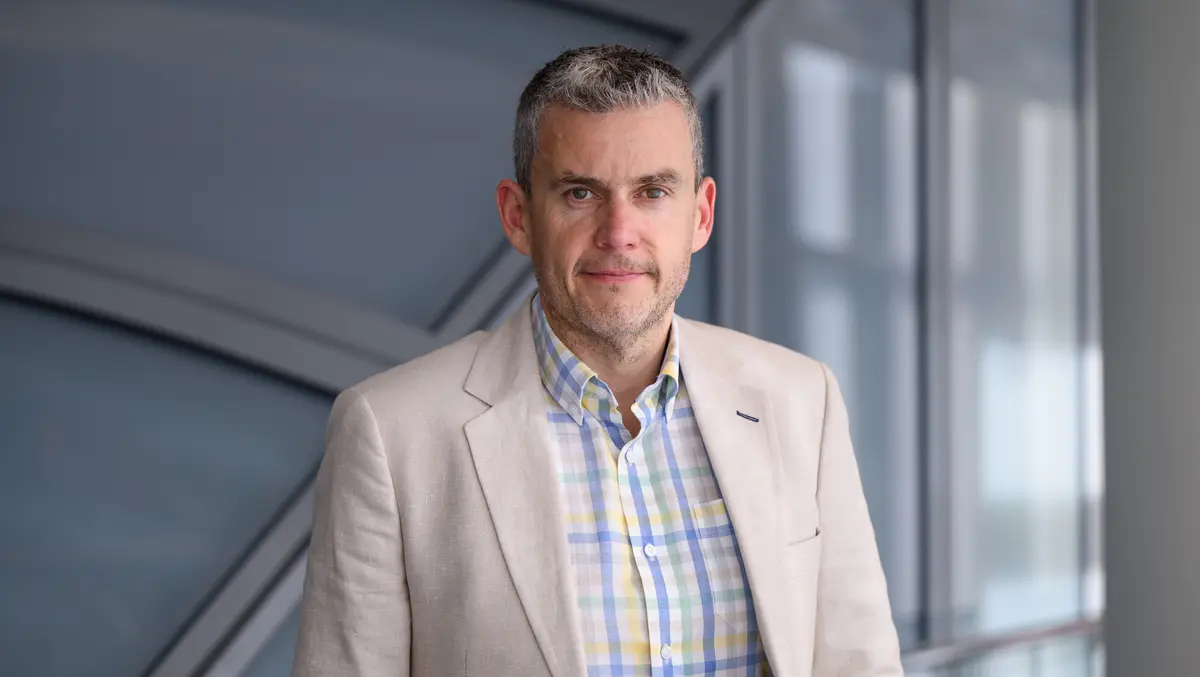
Kicking off an interview with Perth-based Andrew Philp, ANZ Field CISO of the newly-renamed TrendAI, with a comment that no presentation today is complete without mention of these by-now ubiquitous vowels might seem a little gauche. However, he takes it in good humour. "Actually, that's a good point," he grins, "There is more than a bit of 'AI-washing' going around. That said, we know that in boardrooms everywhere, AI is a priority. Rightly, or wrongly."
Rightly or wrongly, because as Philp goes on to add (and as discussed in several recent interviews) the charge towards AI adoption isn't always backed by rigorous governance and quality business cases. Interestingly enough, this reality is somewhat behind the TrendAI moniker.
"It's not a complete retirement of the Trend Micro name, but instead a rebrand of our enterprise business," Philp explains, noting that the company has been researching AI for the better part of two decades. "Essentially, we've been 'doing' AI for some time. So, no, it isn't AI washing, but a better reflection of the services we offer."
What those services are is in its own right noteworthy. Again under no illusions, the straight-talking Philp says continually harping on about threats and leveraging fear as the primary sales/engagement tool does get a little tiresome. Even for security vendors. "We do want to get away from the doom loop."
And, "There is more to it," he notes, and that 'more' is in fact risk mitigation. "Now, of course, you're never going to remove 100% of the risk, because that's not how the world works. But you do want to be clear on what those risks are, where they are, and how best they should be mitigated. And cybersecurity solution providers have always done that."
TrendAI does what a number of vendors are pushing for: consolidation under a single platform, while leveraging the advantages offered by AI. These are sensible moves. Security is better when there are fewer gaps, and fewer systems and vendors to manage. AI lends itself to infosec and any sort of analysis, because it can be both fast and precise (in the right hands, with assiduous oversight).
TrendAI's platform is called Vision One and combines a comprehensive collection of services under one umbrella, across on prem and cloud systems, for emerging applications and legacy software. And it looks to turn the screws on the black hats by moving from reactive to predictive and proactive response.
Conceptually, though, there's a further shift towards governance and guidance for better managed AI introduction, says Philp. "It's a move from pure cyber protection to AI governance through risk reduction," he explains. "That's becoming necessary for two reasons. One is the risk companies face if they are 'doing AI just because everyone else is', which isn't a good business case. The other is that hackers are using AI to automate their work just like everyone else is."
He agrees that cybersecurity has always been an arms race, and that hackers tend to be smart, cunning, and creative in their attempts to get in. After all, they're generally driven by money, sometimes lots of it.
Indeed, IBM has run the numbers and in an online article titled 'Unify your fragmented security: Accelerate transformation with platformization', Big Blue says around one in 10 global organisations reported data breaches involving AI models or applications in 2025.
"The thing is, hackers don't care if they fail as they have nothing to lose. They can fail 1000 times and will be quite happy for the 1001st attempt to deliver a result, because there's no cost for failure and it's their automated AI working around the clock. By contrast, for any business, just one failure means serious problems and costs," Philp points out.
That does rather sharpen the senses to the necessity for higher powered protection on the one hand. And if AI is to be introduced, not only in the cyber defences but anywhere else, then it should be with rigorous governance such that new chinks are not inadvertently created in the armour.
"Our customers definitely have AI on the agenda, but perhaps not always in the best way. The situation calls out for better governance and guardrails." (Indeed, he says TrendAI's research shows that two-thirds of Australian business and IT leaders have felt pressured to approve AI projects while overlooking potential risks.)
And that, says Philp, is why Trend Micro is evolving the cybersecurity value proposition with TrendAI. Taking the lessons of cybersecurity risk mitigation, and applying them to an emerging brave new world where AI dominates presentations, daily discussions, and the way we do business today and into an uncertain future.