

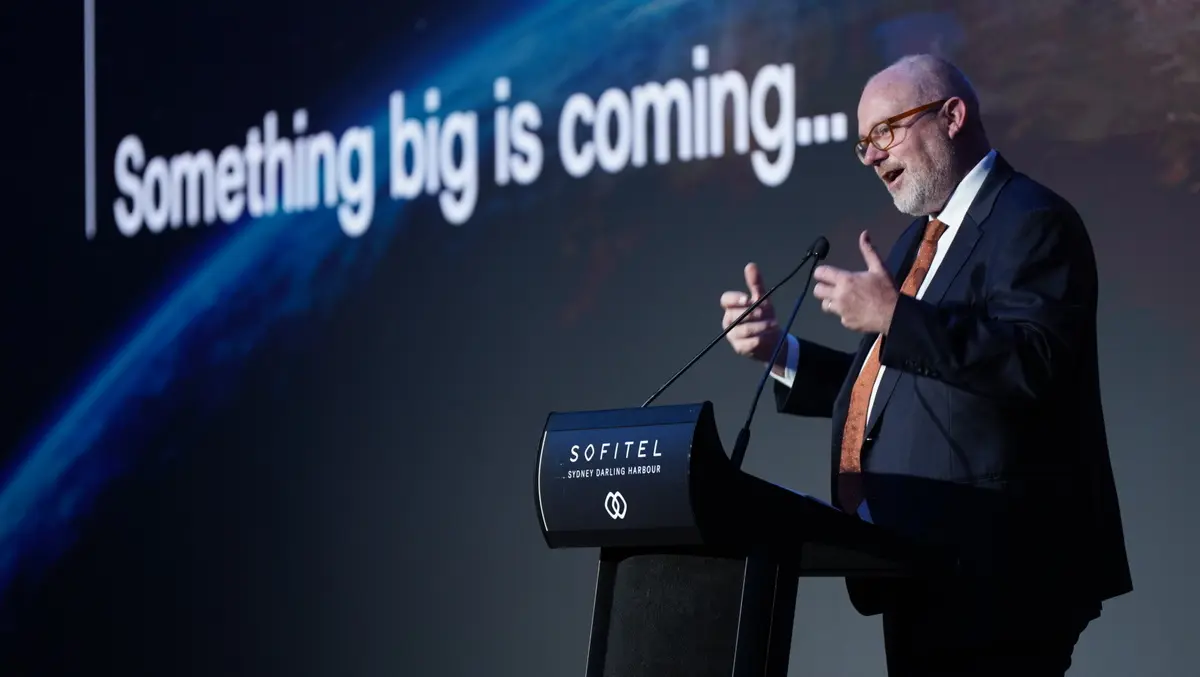
Minister Tim Ayres launches Australasian Space Innovation Institute
Tue, 30th Sep 2025
The Australasian Space Innovation Institute (ASII) has been launched as an independent entity aimed at transforming space research into practical applications for Australia's economy, society, and national security.
The ASII is structured to act as a neutral conduit connecting government agencies, industry partners, and academic and research institutions. Its primary purpose is to accelerate the translation of research into commercially viable, space-enabled solutions.
Roles and collaboration
The Minister for Industry and Innovation and Minister for Science, Senator the Hon Tim Ayres, spoke at the unveiling and emphasised the importance of collaboration across sectors in the development of the space industry. He stated,
"It is good to see an organisation emerge from the CRC funding rounds with all of the support that is provided from Government, but also from industry partners, to graduate and emerge from that and continue to play what I'm confident will be a powerful role in in promoting the Australian space industry, and innovation and development."
Senator Ayres highlighted that while the government's role is often the focus, it is the commitment of various stakeholders, particularly scientists and research bodies, that underpins progress in the sector.
"Often a lot of attention is paid to the role of government in industry, and of course, it's important. But what, what I would prefer to do this morning is focus on that effort, the decades of effort from scientists, from the university sector, from our firms, from thousands of individuals in Australia, pouring their heart and soul and their expertise and their research capability into developing great things for Australia, and great things for the space sector. Too often we gloss over their individual effort, their genius and their expertise, and we all really rest upon the shoulders of so much of that unseen effort."
The current growth and scope of Australia's space industry were also underlined, with the Minister noting its economic and strategic importance. "There are 10,000 people now employed in the space sector in Australia, and startups scaling up AUD $1.1 billion in turnover. This is no small thing. The Australian space sector has no small significance in strategic terms, in industrial terms, in science and research terms, and in national interest terms. I look forward very much as the new Minister for Science and for Industry, working to deliver on these important national interest objectives," he said.
Senator Ayres also addressed his own responsibilities, observing, "I do feel the responsibility acutely, having just been appointed as the Minister for Science and Industry, of making sure that we marshal this big national effort in this sector and some of the other priority national sectors in the national interest. We have a task to align our research effort with our industrial priorities."
On his specific approach to the ministerial role, he added, "My job as the Minister for Science and Industry is not to dream up new reams of sort of policy documents, but it's to work on aligning our current programs to make sure that we deliver maximum impact. I look forward very much to working with the space sector to do precisely that."
Platform for capability and real-world impact
The ASII builds on the foundation set by the SmartSat Cooperative Research Centre, aiming to channel research excellence into outcomes that benefit sectors like agriculture, mining, defence, disaster resilience, and environmental management. It is intended to support the growth of sovereign space capability and productivity across Australia's strategic sectors.
The institute intends to foster faster commercialisation and rapid prototyping by serving as the intermediary between research and end users, helping to achieve broader government and national interests, including defence and security.
Several programmes have been outlined as initial focus areas:
- Australian Agriculture National Digital Twin - An AI-powered model integrating diverse data for better decision-making and sustainability across agriculture.
- Regional Space-Based Surveillance: The Takahē Project - Developing autonomous satellite systems for maritime domain awareness and improved responses to regional security challenges.
- Digital Infrastructure for Disaster Management - Using advanced satellite and AI capabilities for real-time monitoring and coordinated emergency responses.
- Space-Enabled Digital Innovation for Regional and Remote Community Resilience - Applying space technology to support development and well-being in remote and regional communities.
Professor Andy Koronios, CEO and Managing Director of ASII, described the institute's approach to space-enabled solutions and national development.
"ASII is about making space matter for people on the ground. We will deploy and develop satellites, advanced communications and AI-enabled Earth observation to strengthen Australia's digital infrastructure-transforming agriculture, mining, defence, climate resilience and community safety. Our mission is practical impact, sovereign capability and the public good."
Sector growth and future direction
The institute's remit extends to helping Australia build its profile as a high-technology nation through new developments in satellite communications, earth observation, and autonomous space systems. ASII's methods will include rapid prototyping and commercial orientated programs to enhance national capability and security.
The Australasian Space Innovation Institute will commence operation in January 2026 and is structured as a not-for-profit organisation focused on research and translation across the Indo-Pacific region.