

Exclusive: Veeam urges faster data recovery as cyber threats escalate
Mon, 8th Sep 2025
Executives from the data protection company Veeam Software have painted a stark picture of the cyber threat landscape, highlighting the urgent need for rapid recovery, AI-powered detection and board-level support.
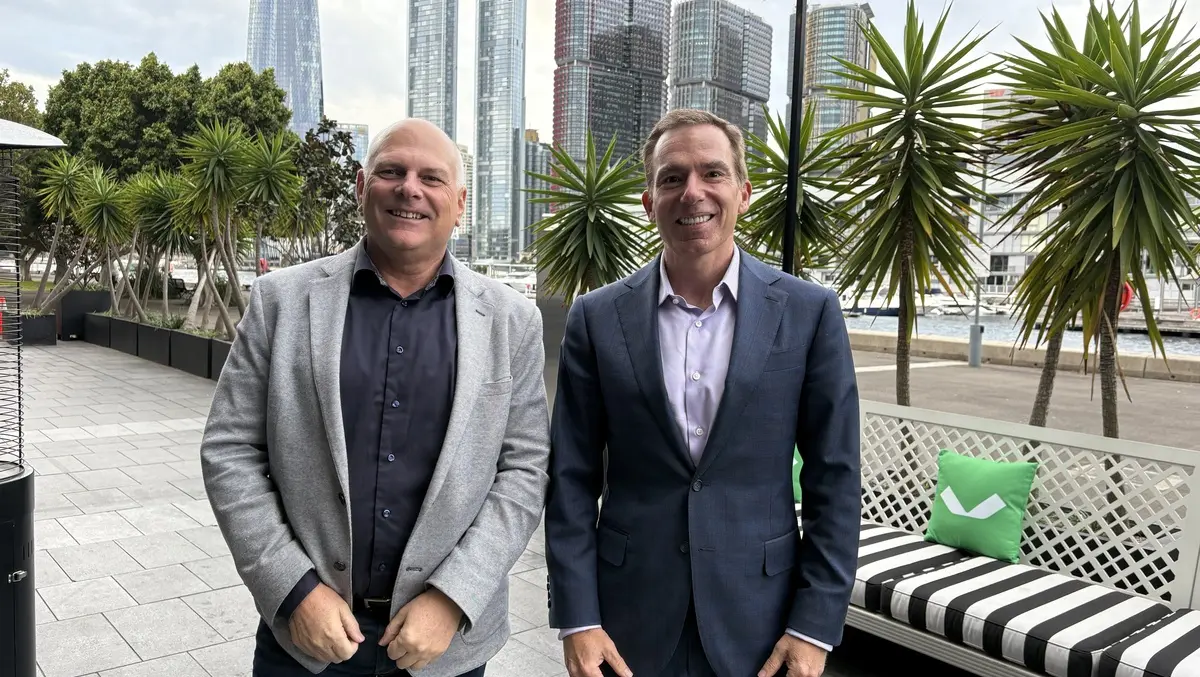
In a joint interview, Gary Mitchell, Veeam's Vice President and General Manager for ANZ, and John Jester, the company's global Chief Revenue Officer, described a new wave of ransomware attacks supercharged by artificial intelligence.
"Cyber criminals are using AI to be more efficient," Jester explained to TechDay.
"They can penetrate an organisation, encrypt and exfiltrate data, and issue ransom demands - all within 24 hours. It's a race against time."
He explained that Veeam is turning to AI as well, not only to detect previously unseen threats but also to automate responses like initiating immutable backups. "It's almost like a battle. We're trying to stay several steps ahead," he said.
Mitchell has overseen Veeam's rise to market leadership across Australia and New Zealand, growing its local customer base to 15,000. He said ransomware is no longer a back-office IT concern - it's a boardroom priority.
"We're seeing board members who've experienced breaches in previous roles pushing cyber resilience initiatives from the top down," he said.
"It's no longer just the CISO saying, 'we need to do this.' The C-suite is backing it like never before."
The regulatory landscape is also tightening.
Mitchell noted that reforms like the Security of Critical Infrastructure legislation are forcing companies to raise their standards. "There's a lot more awareness and a growing duty of care - both from businesses and from customers who say, 'this is my data, and you have a responsibility to protect it,'" he said.
Veeam's business has also had to keep pace with shifting infrastructure models. As more organisations embrace hybrid environments, the firm has ramped up its cloud offerings, including Veeam Data Cloud, which saw its largest global deal signed in Australia this year.
"The risk is not adapting quickly enough to where customers want to go," Jester said.
"They're still running a mix of on-prem and cloud. So our opportunity - and our risk - is delivering excellence across both."
But it's not just about backup. Both executives stressed the importance of testing recovery plans. According to Jester, too many companies find themselves with clean backups but no way to use them efficiently.
"We had a customer, a very large healthcare firm, who had a clean copy of their data but it would've taken two months to recover," he said. "They paid the ransom instead. That's where customers fall short - they test backup, but not recovery."
Mitchell added, "The knowledge gap we see most often is around recoverability. It's one thing to have data backed up. It's another to get it back fast and clean."
To help customers benchmark their readiness, Veeam has developed a Data Resiliency Maturity Model.
Jester said only 8% of assessed enterprises have reached the top level - where AI is used for both threat detection and automated response.
"We want to help every enterprise get to stage three or four," he said.
As enterprises navigate budget constraints amid rising threats, Jester said investment in cyber resilience offers compelling ROI. "Every minute a business is down has financial and reputational consequences," he said.
"We believe the return is three to ten times what's spent."
Locally, Veeam's 100% partner-driven approach has also matured. "Partners are no longer just resellers," said Mitchell. "They're becoming consultants, specialists in orchestration, containers, and niche areas of data resilience."
He also credited New Zealand as a leader in adoption, citing the Christchurch earthquake as a pivotal moment.
"They became early adopters of managed services because they didn't want their data centres under rubble again," he said. "In many ways, they're ahead of Australia."
Looking globally, Veeam is preparing its go-to-market teams with AI-driven training tools. Jester described a system where sales staff pitch to an AI persona of a Chief Information Security Officer. "It scores them on how well they respond to threat vectors, competitive positioning - it's amazing," he said.
At the government level, Mitchell said Veeam works closely with regulators to align on standards such as the Australian Signals Directorate's Essential Eight. "The guidelines start with government, but they quickly become industry norms," he said.
"We collaborate on where those standards should go next."
The VeeamON Tour event itself marked the beginning of a five-stop circuit across ANZ. In a shift from previous formats, the company condensed the event into a half-day intensive. One new feature was a live customer panel featuring Catholic Education Western Australia and a New Zealand enterprise leader.
"Different industries, different approaches, both using Veeam," said Mitchell.
"And they got swamped at the first break - people wanted to pick their brains. That says a lot."
The Sydney session drew over 500 attendees, with more than 2,000 registered across the upcoming stops. Jester said the local engagement reflected the region's forward-thinking approach.
"This part of the world is cutting edge," he said. "It challenges us to keep innovating - and we love that."