

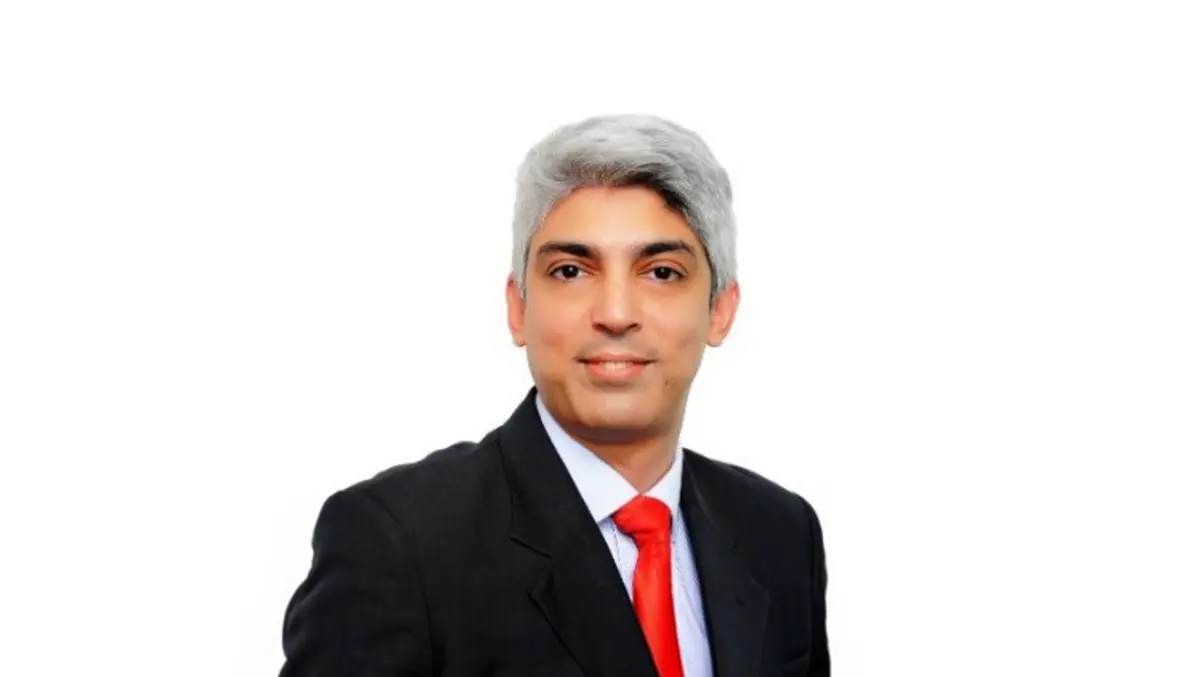
Exclusive: SAS' Deepak Ramanathan on why Australia can't afford to wait
Fri, 29th Aug 2025
Australia risks being left behind in the global race to harness artificial intelligence.
That was the warning from Deepak Ramanathan, Vice President of Global Technology Practise at SAS, who told TechDay that governments and enterprises in the region must shift quickly from hype to hard outcomes if they want to reap the benefits of AI.
"Skilling will be incredibly important," Ramanathan said. "Governments understand the power of AI. They are worried about the citizenry, and they are worried about how corporates are dealing with AI. Upskilling will be a big ticket item going forward, especially for Australia."
From excitement to reality check
Generative AI exploded onto the scene in 2023, and many organisations in 2024 experimented with pilot projects. But Ramanathan argued that too many treated it as a gimmick, not a tool to transform workflows. "A lot of customers looked at Gen AI from a singular productivity [view], rather than an entire business process," he explained. "People are now realising that the message that Gen AI is going to solve all of your problems may not be entirely correct."
The shift in 2025, he said, is to "agentic AI", which integrates curated large language models into automated processes. "The question is, do we have to rip and replace, or can we incorporate it within our existing process flow?" he said. "That's where the conversations are happening right now."
Why Australia cannot afford to wait
Australia has been wrestling with slowing productivity - a fact noted by policymakers earlier this year. Ramanathan said AI presents an opportunity, but only if it is embedded responsibly. "Last Tuesday they had the reform session where they were looking at the loss in Australian productivity," he said. "This is a great way for them to get around that and get ahead of it in many ways."
Yet government adoption is hampered by bureaucracy and the risk of reputational damage. "The penalties are that much more severe," he warned. "Because one way or the other, it's a citizen service that you're providing."
He stressed that delaying adoption is not a safe option. "Every government understands the power of AI," he said. "But unless they act now, they risk falling behind countries that are already retooling their economies around it."
Guardrails, not gimmicks
For Australia to embrace AI responsibly, Ramanathan argued, it must take governance as seriously as innovation. "Regulation is a must, because we also understand the enormous potential of large language models," he said. "As any technology, enormous potential could lead to incredible good or incredible harm."
SAS's answer is what it calls the analytics lifecycle model - building guardrails into every stage of AI development. "At every point of the life cycle you have these capabilities to make sure that it's governed," Ramanathan said. "We are detecting bias as quickly as possible, so that we provide those safety rails."
The worst mistake, he warned, is to feed biased data directly into models. "That's a bad process," he said. "If you take data which has bias built in at the source, it'll get amplified by the time you go ahead and deploy a model."
Lessons from industries moving faster
Financial services, Ramanathan said, are ahead in adopting responsible AI because they already have decades of experience with analytics. Manufacturing, with its use of digital twins, and governments eager for productivity gains, are also advancing.
By contrast, he suggested Australia risks lagging without the right investment in skills. "The next generation of students will now start to learn something completely different from what I learned 25 years ago," he said. "Australia has some of the world's leading universities, and AI programmes will slowly start coming in."
SAS at 50: looking ahead
As SAS approaches its 50th anniversary in 2026, Ramanathan insisted the company is not simply chasing trends but extending its long-standing analytical frameworks into new domains. "AI continues to be another analytics extension," he said. "Quantum AI could solve problem sets with phenomenal consequences - in drug research, in logistics planning, in drug discovery."
For him, the company's mission remains focused on societal impact. "We are working with a bank in Singapore to stop fraud," he said. "Fraud leads to billions of dollars of loss, but it also leads to enormous distress to the population. Being able to influence and positively influence people's lives - that's the exciting part of SAS."
Ramanathan urged Australian leaders to act decisively.
"Upskilling, governance, and productivity - these are the three things that matter now," he said. "Influencing and positively influencing people's lives, that's the exciting part of SAS, and I'm really looking forward to the next 50 years."