

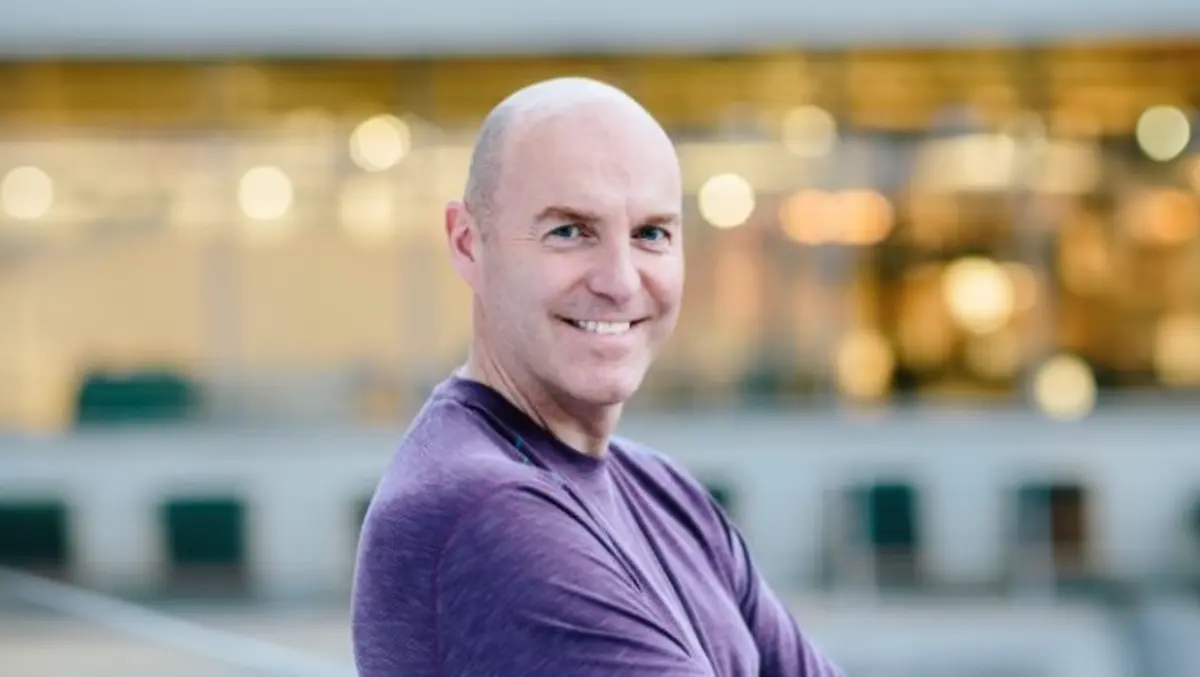
Exclusive: Autodesk's Daron Green warns of AI 'disintermediation'
Mon, 1st Sep 2025
Autodesk's Chief Scientist Daron Green says the next wave of artificial intelligence will supercharge how Australians design and make things - but also force software companies to confront the risk of losing direct contact with their customers.
During a recent interview in Sydney, Green warned that "disintermediation" is the looming threat, as language-based AI interfaces become the default way people interact with powerful tools.
"In media and entertainment there's a broad recognition that they're going to get disrupted, because there are so many new ways people can create content," he told TechDay.
According to Green, studios guard prized digital assets so tightly that suppliers share "very few assets", which then makes training domain models difficult.
That tension is reshaping how Autodesk Research works with clients. "We sort of have to erase the memory of the AI system," Green said. In some cases, Autodesk shares an untrained model and helps partners train it - only for them to discover limitations.
"They think they're sitting on a lot of data, and it's like 20,000 objects or 50,000 objects, and it's just not a big enough data set for the model to get a level of intelligence," he said.
Scale, he argued, is what separates simple tricks from genuine capability. Referencing a Google study, he said properties such as humour or sarcasm only emerge once models are trained on sufficiently vast data sets. "You need to get to a certain scale for it to appear to show the properties of intelligence," he said.
Inside Autodesk, AI has already transformed everyday engineering practice.
Developers are now running "five or six experiments a day" using AI-assisted coding, he said. "You could say AI is going to remove their jobs, or it makes them incredibly more productive. And that's what we're seeing."
Some of this work is already embedded in Autodesk products used in Australia. Green pointed to automated sketch constraints in Fusion. "We've trained up an AI model that will just put the constraints on for you, and that has just shrunk the tedium," he said. Another model automatically identifies parts like nuts and bolts.
"Nobody wants to be experts in picking out nuts and bolts," he added.
He also flagged upcoming research projects. Models such as Bernini have been followed by work he called B-rep Gen - short for boundary-representation generation. "It has properties that make it really interesting to us. It's much more robust," he said, noting demonstrations are planned for Autodesk University.
Yet the disruption he worries about most comes not from the models themselves but from the new standards that make it easier to connect large language models to specialist software.
"That's our next kicker," he said. The danger is stark: if a user accesses Autodesk's simulation engine through a generic prompt rather than Autodesk's own interface, the company loses visibility. "The new interface is the prompt," he said. "We've been disintermediated."
To counter that, Green argued software firms must radically rethink human–computer interaction. Traditional menu-driven interfaces won't work when creation begins with speech, sketches or reference images. "We need to provide just a fantastically compelling experience," he said. The shift, he added, also opens design tools to a wider audience. "We can reach a whole different raft of users that will actually be able to interact with our capability," he said.
When asked about the future, Green admitted he wants AI to move beyond geometry and physics to model user intent and lived experience.
"Most software companies don't have intelligence that really characterises their user base," he said. He envisages systems that understand a manufacturer's materials policy, a designer's specialism or a project's sustainability goals, and present options accordingly.
"I'd like us to have a more sophisticated understanding of the user, the user's company and certain policies within the company," he said.
That ambition stretches to ergonomics and acoustics - familiar to anyone who has struggled to hear in a noisy café or grip an awkward cup handle. "Surely we should be able to build some of that intelligence into our software," he said. "We can do some of those things right now… but I would like it to be much more systemic."
Timelines, however, are uncertain. Green said he once expected a plateau after large language models, only for the next bump to arrive sooner than expected.
"These waves are coming quicker," he said. For Australian studios, builders and manufacturers, the lesson is clear: invest in internal AI expertise and experiment relentlessly. "You assess where you are as a company by experimenting like crazy," he said.
Autodesk itself has reorganised to accelerate research-to-product flow, and Green encouraged close reading of its annual Design and Make report. "Sustainability on the rise; use of AI as a fuel for the way that we're going to tackle some of these problems," he said.
Despite the risks of "disintermediation", his outlook remains expansive. He spoke of intent-aware systems, AI spanning from individual parts to city-scale scenes, and interfaces that attract newcomers while reassuring experts that outputs are manufacturable and robust.
"The opportunities are just huge, absolutely huge," he said. And the ultimate goal, he added, is simple: "Regardless of where the user is coming from, for them to be able to express their need and for us to understand it."