

Australian firms shift to open, flexible access systems
Tue, 25th Aug 2026
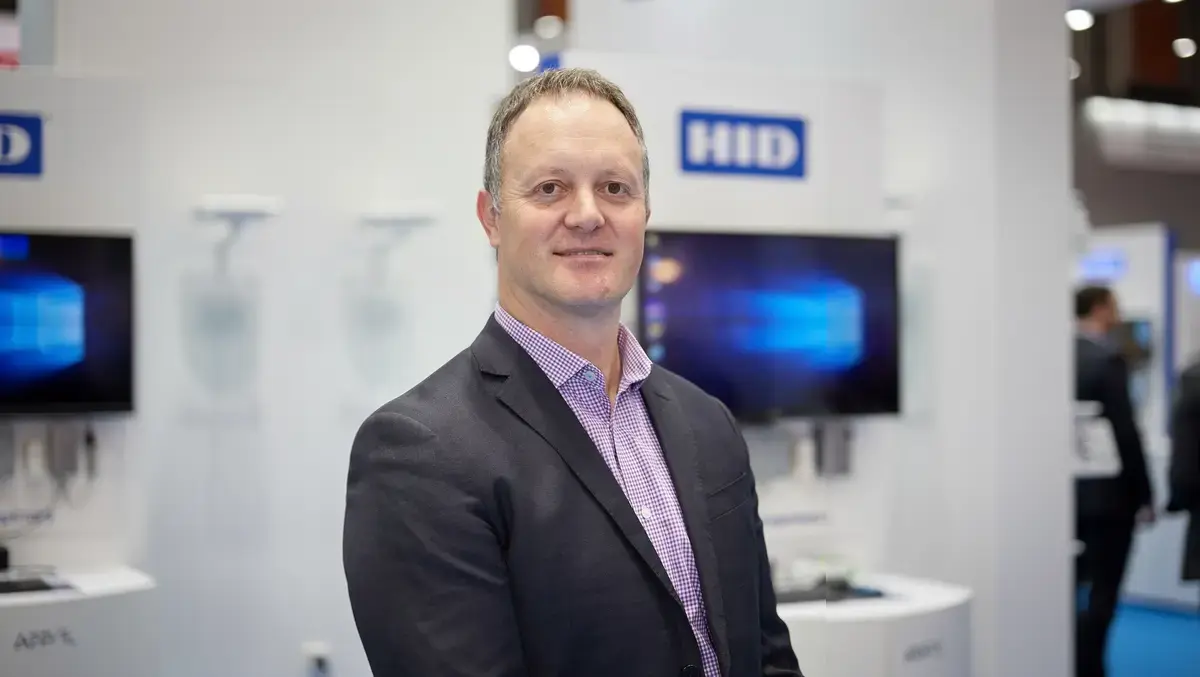
Australian organisations are shifting towards open and flexible physical access systems, according to HID's Head of ANZ for Physical Access Control Solutions.
Steve Katanas said the market is moving away from treating access tools as standalone products and towards a broader view of identity across physical and digital environments. He identified mobile credentials, biometrics and cloud-connected systems as areas drawing more attention, while saying interoperability and long-term adaptability are becoming more important in buying decisions.
In HID's view, that places open architecture at the centre of the market. Katanas said organisations want to avoid being tied to a single supplier as security technology evolves more quickly and businesses look to integrate different systems without replacing entire estates.
"Absolutely. If I had to identify one trend that will define enterprise access control in 2027, it would be the move towards flexibility and freedom of choice. Technology is evolving too quickly for businesses to be locked into a single vendor ecosystem for the next decade. They want the freedom to adopt new technologies, integrate different systems and upgrade over time without starting from scratch. That's why open architecture matters. It reduces vendor lock-in, protects existing investments and gives organisations more choice over how they evolve their security environments. In many ways, open architecture is no longer a technical preference. It's becoming a business requirement," Katanas said.
He linked that argument to Mercury Security, HID's controller business, saying controller platforms sit at the centre of many access systems because they determine how readers, credentials and software work together. In practice, the controller layer can shape how easily a site adopts new technologies later on.
Identity shift
Katanas also highlighted the growing role of identity in workplace and building management. Rather than treating access control as a narrow door-entry issue, organisations are increasingly considering how employees, visitors and contractors are identified and managed across a wider range of environments, he said.
"The defining trend will be the elevation of identity from a security function to a business enabler. Organisations are under pressure to strengthen security, improve productivity and deliver better employee experiences, all while managing increasingly complex environments. That's driving a shift towards more connected identity ecosystems that bridge physical and digital access. The conversation is moving beyond doors and credentials towards how organisations securely enable people to work, move and collaborate. Those that view identity as a strategic asset rather than an operational necessity will be best positioned for the future," Katanas said.
That position reflects a broader change across commercial property, education and enterprise environments, where access systems are increasingly expected to connect with parking, lifts, lockers, shared workspaces and other services. In those settings, digital identity becomes part of day-to-day workplace operations rather than a standalone security tool.
Mobile and biometrics
Mobile wallet credentials are expanding beyond premium office towers into university campuses, hotel estates, residential communities and broader property portfolios, Katanas said. He argued that smartphone-based access is gaining traction because users already rely on the same devices for payments, transport and digital services.
He pointed to HID's recent mobile wallet deployment at 101 Collins Street in Melbourne as an example of digital credentials integrating with an existing building system. Similar projects are now appearing across a wider range of sites, he said, as owners and operators seek to reduce dependence on plastic cards.
Plastic credentials, however, are not disappearing entirely. Katanas said the likely direction is a hybrid model, with cards, biometrics and mobile credentials operating together according to site requirements and budget constraints.
Biometrics, long discussed as a specialist security tool, are also becoming more practical in daily operations, he said. Instead of being confined to airports or sensitive facilities, facial recognition and similar systems are now being considered for higher-traffic office settings such as lobby turnstiles.
"The biggest change is that biometrics are becoming much more practical in everyday building operations. Historically, many organisations viewed biometric authentication as something reserved for airports, government or highly secure facilities. Today we're seeing biometric technologies becoming easier to deploy and better suited to high-traffic environments, such as turnstile gates in office lobbies. A great example is HID Amico Biometric Reader, which uses facial recognition to support frictionless authentication, while providing flexible integration options. The conversation is now shifting from 'Should we use biometrics?' to 'Where do biometrics add the greatest value?' That's a much more mature discussion," Katanas said.
AI and upgrades
On artificial intelligence, Katanas took a cautious view. He said AI may help organisations identify anomalies in access data and improve efficiency, but only if the underlying identity and credential data is reliable.
That emphasis on data quality fed into a broader argument that modernisation does not have to mean a full rip-and-replace project. Katanas said many organisations still assume an access control upgrade means replacing everything at once, when in practice some existing infrastructure can remain in place during a staged transition.
"One of the biggest misconceptions is that upgrading access control always means replacing everything. At HID, we work closely with our partners to help organisations modernise at a pace that aligns with their operational, security and budget requirements. Depending on their existing infrastructure, organisations may be able to retain compatible components while progressively introducing technologies such as digital wallets, cloud-based management, biometrics and more secure credential and reader platforms that support multiple technologies and evolve alongside changing security requirements. This phased approach can help organisations manage cost, complexity and risk while still moving towards a more modern access environment. I think that's one of the biggest messages the industry will understand in 2027: modernisation should be evolutionary rather than disruptive," Katanas said.
He said the likely surprise over the next several years will be how quickly older processes begin to look outdated, citing the use of multiple cards, slow credential issuance and separate systems for employees, visitors and contractors as examples of complexity businesses may no longer accept.